Supply chain risk management helps you identify exposure, assess potential business impact, mitigate priority threats, and monitor changing conditions. Its value comes from the decisions it enables: protecting revenue and margins, reducing recovery costs, improving customer service, and using working capital more deliberately.
For chief financial officers, chief supply chain officers, chief procurement officers, and their teams, supply chain performance is inseparable from business performance. Late inbound deliveries stop production. A port disruption may delay customer orders. A supplier issue may create an expensive scramble for alternate capacity, materials, or freight.
The cost of a disruption is visible. The value of avoiding one often is not.
That is why supply chain risk management should not be treated as a general insurance policy or a cost center. It is a decision-making discipline. It helps businesses understand where they are exposed, decide where to invest, and act before a risk becomes a costly operational problem.
What is supply chain risk management?
The Association for Supply Chain Management defines supply chain risk management as the identification, assessment, and mitigation of potential supply chain disruptions. In practice, an effective program also monitors changing conditions. This enables you to confirm whether a risk has been addressed and spot new exposures early.
A practical supply chain risk management program follows three connected stages:
| Stage | Core question | Action | Business value |
| Identify | Where are we exposed? | Map suppliers, facilities, materials, lanes, and dependencies. Assess external and internal risk. | Creates a baseline for prioritization instead of treating every risk as equally urgent. |
| Mitigate | Which actions best reduce priority exposure? | Compare options such as alternate sourcing, inventory changes, rerouting, supplier engagement, or pre-approved response plans. | Directs investment to the risks with the greatest potential operational or financial impact. |
| Monitor | What has changed, and what requires action now? | Track relevant events, validate impact, and route actionable alerts to the right people. | Creates more time to respond, reduce recovery costs, and protect customer commitments. |
In simple terms: supply chain risk management is about knowing what could go wrong, understanding what it could cost, and acting early enough to change the outcome.
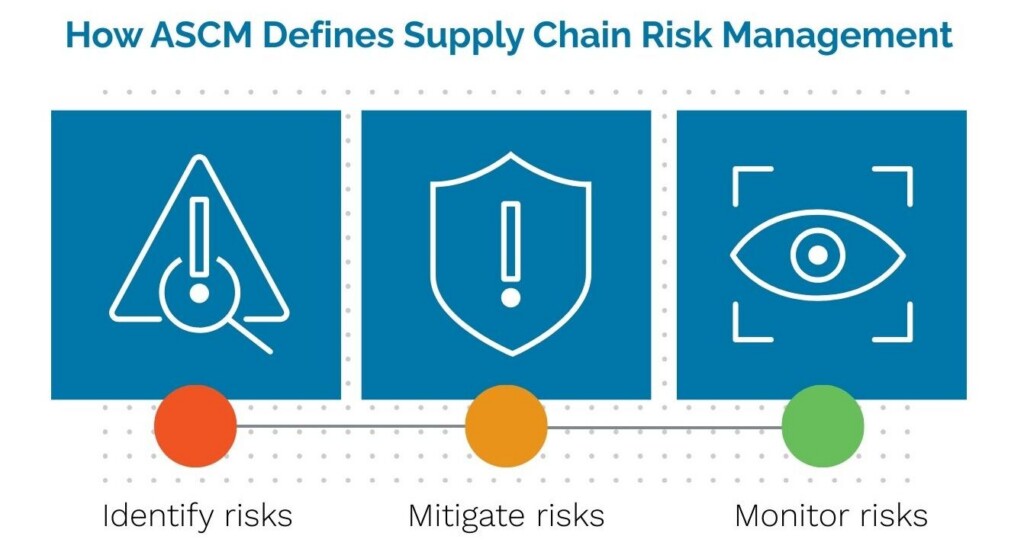
Figure 1: The three-stage approach to supply chain risk management recommends identifying exposure, mitigating risks, and continuous monitoring of potential issues.
Why does supply chain risk management matter to financial performance?
Disruptions cause production stoppages, lost sales, inventory imbalances, customer-service failures, penalty fees, demurrage, and expensive recovery activity.
At the same time, overcorrecting creates a different financial problem. Excess safety stock ties up working capital. Dual sourcing add costs, but this does not necessarily reduce the risks that matter most. Expedited freight may protect a shipment, but repeated expediting erodes margin.
The objective is not resilience at any cost. It is to make proportionate, evidence-based choices about where resilience will create the most value.
How can you balance resilience with cost?
Start with the business outcome that matters most. For one organization, it may be preventing production stoppages for a critical product. For another, it may be protecting an important customer promise or avoiding a compliance-related sourcing disruption.
Then assess the risk in business terms. Consider the likely operational impact, potential revenue loss, margin exposure, recovery costs, available response options, and time required to act. This helps your business avoid a blanket approach to risk mitigation.
Supply chain risk assessment helps organizations identify the suppliers, materials, facilities, and geographies that need attention. The result is a more targeted approach: reduce safety stock where exposure is low, protect critical dependencies where disruption would have a greater cost, and make trade-offs visible to finance and operations leaders.
Where should a company start?
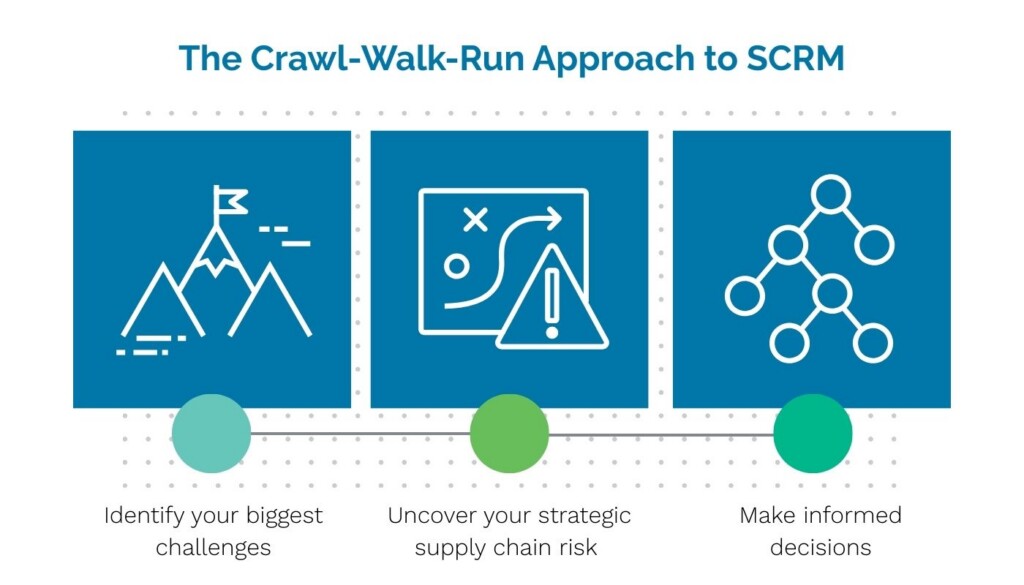
You do not need to transform the entire supply chain at once. A crawl-walk-run approach is usually more practical.
- Choose one or two high-impact use cases. Focus on a business problem with a clear owner and measurable consequence, such as a critical supplier, a vulnerable material, or a high-risk logistics lane.
- Establish the baseline. Map the relevant dependencies and assess the exposure, likely impact, and available response options.
- Define decision thresholds. Agree what conditions require monitoring, escalation, mitigation, or a change in sourcing, inventory, or logistics plans.
- Measure the result. Track the operational and financial outcomes that matter to the use case, then use those results to guide the next phase.
This approach creates early, credible proof of value. It also gives the CFO, CSCO, and CPO a shared basis for deciding where further investment will have the greatest effect.
How does supply chain risk management create measurable value?
Supply chain risk management creates value when risk intelligence changes a decision before disruption creates avoidable cost. The most useful measures depend on the use case, but they often fall into five areas.
| Value area | What to measure | Example of the value created |
| Revenue protection | Avoided production stoppages, prevented stockouts, protected sales, or reduced lost-order risk. | You secure an alternate source before a critical supplier disruption affects production. |
| Margin protection | Reduced expedite spend, demurrage, penalty fees, replacement cost, or recovery cost. | You reroute before a weather event, congestion, or a port incident creates avoidable premium freight costs. |
| Working capital | Inventory held against exposure, inventory released where risk is lower, and cost of resilience decisions. | You use risk evidence to target buffer stock rather than adding inventory across your full supply base. |
| Customer service | On-time-in-full performance, order fulfilment, customer escalation, and lead-time reliability. | You protect a priority customer delivery by acting before a lane disruption becomes a missed commitment. |
| Decision speed | Time from alert to assessment, mitigation decision, and execution. | You receive relevant, contextualized information early enough to secure scarce capacity or activate a contingency plan. |
Do not measure the program only by the number of alerts received or risks identified. Those are activity measures. The stronger question is: what decision did the company make, and what operational or financial outcome did that decision protect or improve?
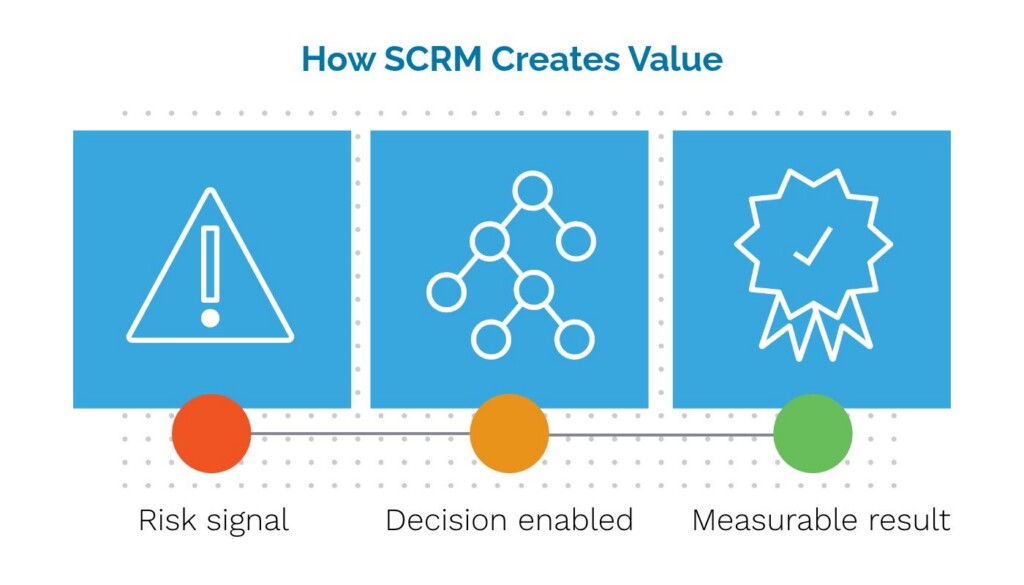
Figure 2: SCRM creates value by identifying risks, enabling effective decisions that lead to measurable results, such as costs avoided, improved OTIF, and fewer production stoppages.
Four examples of supply chain risk management value
1. How can location incident assessments reduce disruption costs?
A fire, flood, severe weather event, strike, or local infrastructure incident impacts a supplier location, manufacturing site, distribution hub, or logistics facility. An early warning is useful only when you understand the event’s likely duration, severity, and relevance to its own network.
Risk signal: A disruptive event occurs near a mapped supplier location or distribution hub.
Decision enabled: You validate whether the site, materials, inbound flows, or customer commitments are affected. You then allocate inventory, activate an alternate supplier, adjust production, or secure capacity before the disruption escalates.
Measurable outcome: Earlier action reduces premium freight spend, avoids production outages, and supports more accurate inventory allocation for sales and operations planning.
Global Monitoring and Alerting helps you focus on events that are relevant to your mapped supply chain, rather than reacting to generic news alerts.
2. How can lane and shipment risk improve logistics decisions?
In-transit inventory may be exposed to delays, damage, loss, weather, congestion, labor disruption, or other events affecting a planned route. It is critical to understand potential lane risk before choosing a route, mode, carrier, or delivery plan.
Risk signal: A potential disruption affects a planned or active shipment lane.
Decision enabled: You assess likely impact and decide whether to reroute, change mode, adjust schedules, reserve capacity, or coordinate a response with customers and internal stakeholders.
Measurable outcome: Earlier, better-informed logistics decisions improve on-time-in-full delivery, protect customer service, and reduce unplanned expedited freight costs.
3. How can supplier risk scoring support sourcing and category decisions?
Suppliers face many different forms of risk, including natural disasters, civil unrest, financial stress, labor and human-rights risks, regulatory change, and location-specific disruption. A supplier risk score gives procurement and category managers a consistent way to compare exposure and identify where a dependency may require closer attention.
Risk signal: A supplier, facility, or material has exposure outside the organization’s risk appetite.
Decision enabled: You investigate the exposure, engage the supplier, develop an alternate source, change the sourcing strategy, or put the dependency under closer monitoring.
Measurable outcome: Better supplier-selection and category-management decisions reduce the likelihood that a supply interruption affects production volumes, customer service, and revenue.
Risk Assessment supports location-based supplier risk assessment and helps you prioritize the suppliers and materials that require action.
4. How can sub-tier visibility create value?
Sub-tier visibility helps you uncover risks buried deep in the supply chain. These include material dependencies, human rights abuses, and single points of failure.
Risk signal: Using sub-tier data, you learn that three of your European suppliers are not producing a critical material. Instead, all three were purchasing the material from a Tier-2 supplier.
Decision enabled: You determine whether a direct relationship with this Tier-2 supplier would be financially beneficial for your company. If so, you develop this relationship while winding down your commitments to your three Tier-1 suppliers.
Measurable outcome: Sub-tier visibility traces the chain of custody for materials. This allows you to verify origins and ensure responsible, sustainable, and cost-effective sourcing.