

How to Evaluate and Monitor Supplier Risk
A supplier risk assessment is a structured process for identifying, scoring, and managing threats that could disrupt supply. Procurement teams use it before selecting a supplier and throughout the supplier lifecycle. The assessment considers operating location, external exposure, material criticality, and risk controls. Its purpose is not to eliminate every risk. It is to help you make sourcing decisions that fit your organization’s risk appetite.
In this guide, you will learn how to:
- Screen suppliers before you award a contract.
- Weight risks according to their likely business impact.
- Identify materials that require stronger contingency plans.
- Monitor changes in supplier risk over time.
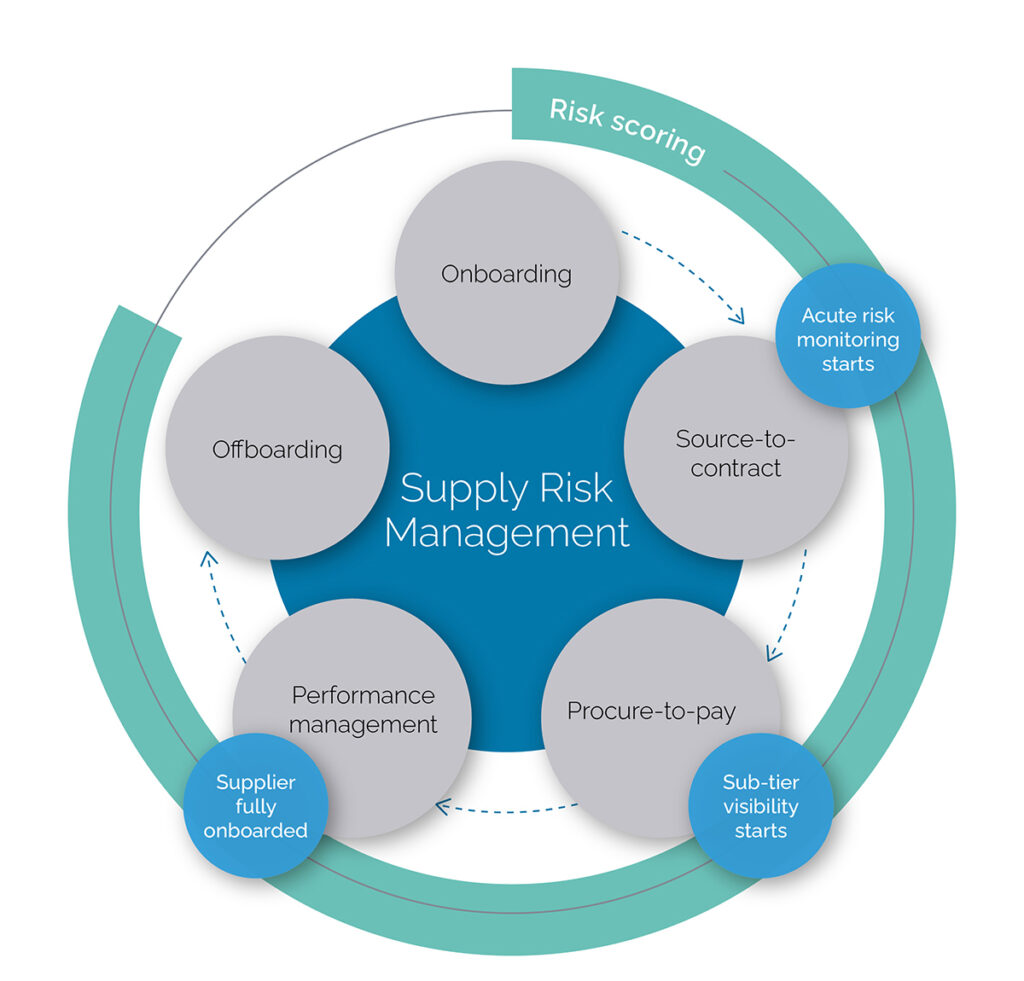
Figure 1: To strengthen supply chain resilience, supplier risk scoring should be an integral part of the selection process, and continuous monitoring should occur over the supplier lifecycle.
What is a supplier risk assessment?
A supplier risk assessment helps you understand whether a supplier can reliably support your business. It evaluates the threats associated with the supplier, the material supplied, and the supplier’s operating environment. It also considers the steps the supplier takes to reduce those threats.
A useful assessment looks beyond price, capacity, and quality. It also asks whether a disruption could affect your ability to manufacture, serve customers, or meet your own compliance obligations.
The goal is not to remove every supplier with some exposure to risk. No supplier relationship is entirely risk-free. Instead, the goal is to identify the risks you can accept, the risks you can mitigate, and the risks that require a different sourcing decision.
Risk appetite is the amount and type of risk your organization is prepared to accept while pursuing its business objectives.
Why assess supplier risk before you select a supplier?
Choosing a new supplier for your business can be a critical decision. Your suppliers play a central role in your organization’s success.
As a result, the supplier selection process is rigorous. From the early stages of defining requirements to market research, requests for information and quotes, through to evaluating suppliers, shortlisting, and negotiation, companies carefully consider all their options.
As part of due diligence, companies will review a supplier’s reliability, operational capabilities, financial health, and so forth. Companies do this to mitigate potential risk and ensure a mutually beneficial partnership.
Assessing supplier risk during selection
Supply chains face a wide range of risks, and any one of them could seriously affect both a supplier and your organization. Modern supply networks are closely connected, so disruption at one point can quickly create consequences elsewhere.
If a supplier lacks effective systems and procedures to identify and reduce risks before they escalate, your business may eventually experience the impact.
Even before engaging directly with a potential supplier, you can assess risk exposure across several areas during the initial vendor assessment stage. These may include:
- Natural disaster and climate risk: Earthquakes, floods, hurricanes, tropical cyclones, and water-related risk.
- Socio-political and geopolitical risk: War, civil unrest, terrorism, law-enforcement activity, and strikes.
- Sustainability and ethical risk: Child labor, workers’ rights concerns, and corruption.
- Logistics risk: Customs delays and disruptions affecting sea, road, rail, or air transport.
- Tax, economic, and legal risk: Tax inconsistency, inflation, sovereign default, expropriation, contract enforcement, and so forth.
These risk ratings are based on the supplier’s production location or wider operating region. You therefore need to know where the supplier intends to manufacture the parts or products it will provide. Make this information a mandatory field in initial bids and supplier-information requests.
By using these ratings early, you can identify potential concerns sooner and establish clear thresholds for suppliers that do not meet your requirements.
This approach also makes the bidding process more efficient for evaluation teams. With relevant, actionable data available from the outset, they are less likely to select an unsuitable supplier.
What is Everstream Analytics Risk Assessment?
Everstream Analytics Risk Assessment delivers automated, location-based strategic risk scoring that empowers procurement teams to develop risk-informed sourcing decisions. This helps you build supply chain resilience into the supplier selection process.
The solution offers more than 40 automated scores to evaluate external risks. Our scorecards assess risks such as weather and natural disasters, political violence, ESG and sustainability issues, operational risks, and so forth.
The scores are based on proprietary data as well as trusted sources that include S&P Global, Transparency International, Munich Re and others.
Think of this as strategic risk intelligence. In other words, the supplier has certain vulnerabilities that could cause supply chain disruptions at a later stage.
Weighting the risks
Not all companies are concerned about the same risks. This is where risk weighting comes into play.
External risks are weighted according to your priorities. This weighting helps create the supplier scorecard.
Take for example a supplier based in an area prone to earthquakes. The supplier has invested in an earthquake-proof building.
If you source industrial machine parts from this supplier, the earthquake-proof building should be enough to outweigh the risk this location poses. Therefore, you would weight earthquake-related disruptions as a lower priority for your company.
However, if you source semiconductors or specialty glass, even minor tremors can cause serious issues. Therefore, you would weight earthquakes and tremors as a high-priority risk.
Once you have weighted the risks according to your priorities, the supplier scorecard is ready.
This is a number between 1 and 25, where 1 represents a low level of risk, and 25 is a very high level of risk.
This numerical value makes it easy to understand supplier risk across multiple dimensions.
You can use this to set “no go” thresholds and remove highly risky suppliers from consideration.