The Importance of Human Validation and Contextualization
AI is a fantastic tool for managing large data sets. Thousands of events, big and small, happen every day that have potential supply chain implications.
Once the AI has flagged events that impact supply chains, human analysts validate the incident. When the event is confirmed, the analyst creates an alert. This team works globally for 24/7 coverage.
Human analysis creates more relevant near real time alerts.
There can be nuances to events that AI would struggle to correctly interpret. Take for example the recent crisis in the Middle East.
Imagine you are a category manager at a food and beverage company based in France. You purchase tea leaves from suppliers in China and India. You might be initially worried about transportation routes being inaccessible and longer transit times around the Cape of Good Hope.
What you may not have considered is that the conflict impacted global fertilizer supply. This could result lower yields of tea leaves from your suppliers. The sooner you know there may be an issue that could affect the harvest, the better placed you are to make decisions on how to mitigate the potential shortfall.
Everstream Analytics analysts add contextual understanding to disruptive events. Therefore, you have a clear idea of how an event may perpetuate across your supply chain, months or even years after the event has passed.
Defining the Impact Zone
When an event occurs, our Global Monitoring and Alerting solution defines the impact zone. This is known as “shaping” and it maps the exact geolocation of a disruption.
For an event like an earthquake, it makes sense to use a radius. This is because the magnitude allows you to calculate the impact zone.
Many supply chain risk alerting solutions default to a radius to draw the impact zone. But this can lead to incorrect or missing information.
Reverting to our cinema fire example, you will see what this means. It is not just the building that has been affected by the fire; the area around it has been impacted too.
On the left-hand side of the illustration, a radius of 500 meters was drawn around the fire.
On the right-hand side, a polygon was used because the fire was concentrated on the northern side of the complex. The widest edge of the polygon is 500 meters, as this is as far as the sparks flew.
The radius assumes that both roads beside the cinema are closed. The polygon shows that only one road is affected.
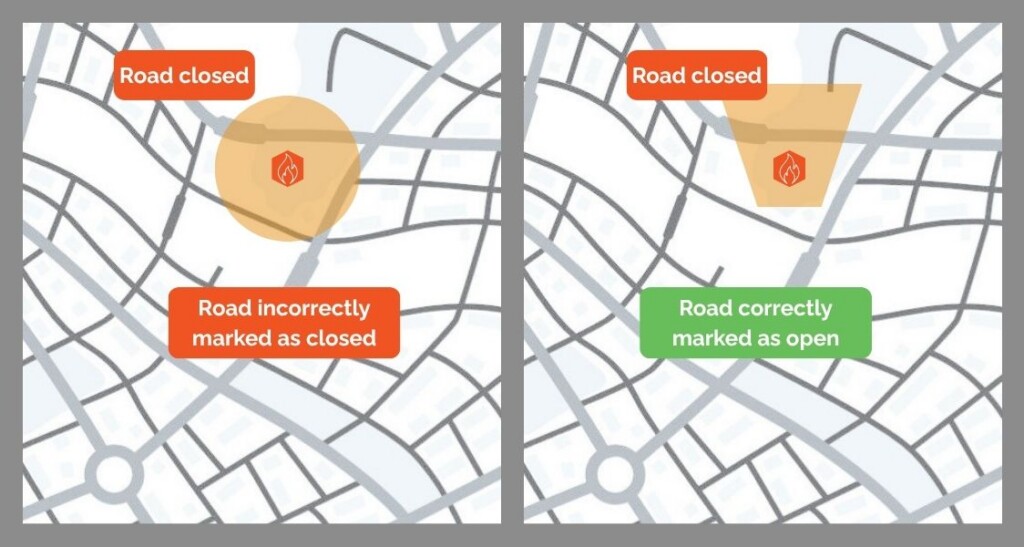
Figure 1: Using a radius to define the impact zone of a disruptive event can lead to imprecise information.
Unless the closed road was the only way to a major transit hub, the impact would seem to be limited to traffic jams.
But even small events can have supply chain impacts. Let’s take a look at how this works.
Deciding Who Needs to Know
We chose the example of a fire at a cinema because it is a very small event that would not seem to have many supply chain ramifications.
Earlier we asked you to imagine you were responsible for sourcing tea leaves for a F&B manufacturer in France. Let’s see how this fire might impact your role.
On the illustration below, you will see that a warehouse belonging to a company called AMGS Logistics is located north northeast of the cinema. The warehouse sits just outside the radius. Therefore, if your solution defaults to a radius for the impact zone, this disruption will not be correctly tagged.
However, it does sit inside the polygon. That means that Everstream Analytics will correctly tag it as impacted by the fire.
Narrowing Alerts
Before sending an alert to you, Everstream Analytics will filter the information further:
- What industries are impacted?
- Do you or your suppliers use AMGS Logistics?
If AMGS Logistics does not serve your industry and is not a part of your supply chain, this incident is irrelevant to you.
However, in this case, our fictional company AMGS specializes in working with retailers, food and beverage manufacturers, and FMCG products.
Your company does use AMGS Logistics. It is a big 3PL and has over 200 locations between warehouses and offices in more than 30 countries.
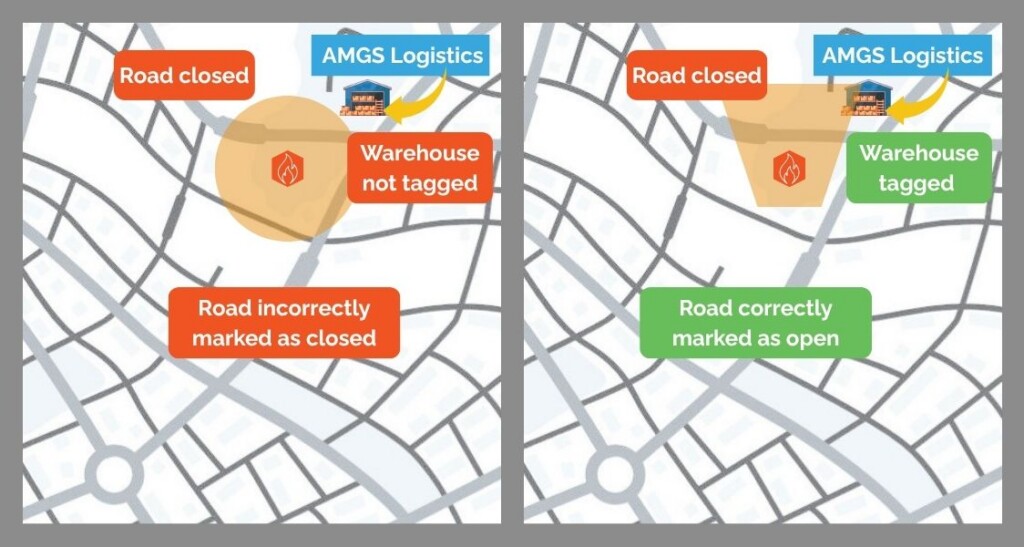
Figure 2: By mapping your supply chain, you will be able to clearly see the impacts of both large- and small-scale disruptive events.
If you use a supply chain risk management solution that only gives alerts based on company names, then you will definitely get a notification.
In fact, anytime anything happens at any AMGS location anywhere in the world, you will get a notification.
This is despite the fact that you only use this 3PL at two locations in France and five locations in the United States. Sooner or later, you will start to ignore all the alerts about AMGS Logistics, because they are not relevant to you.
Reducing Alert Noise
Everstream Analytics can tell if this AMGS location is relevant to your company by mapping your supply chain. This reduces alert noise because you do not receive notifications regarding facilities that do not matter to you.
Well, we have some bad news for you. This is indeed one of the AMGS Logistics facilities in France that your company uses.
Before you receive an alert, we need to ask another question:
- Is this something you need or want to know about?
In France, your company uses one AMGS facility to receive incoming shipments of tea leaves. It uses the second location to distribute high grade sparkling tea across the continent.
Unfortunately, we have more bad news for you. This is the facility you use to store incoming tea leaves. The facility may not have burned down, but your tea leaves were exposed to smoke. Therefore, they are no longer safe for human consumption.
You are the person responsible for this. Therefore, you get an alert as soon as the event has been validated.
You could, however, decide that you would like to receive alerts not directly related to your responsibilities. Perhaps you would like to receive a summary of all incidents related to your company every morning. Maybe you want to receive weekly digests of F&B industry information or the tea market.
Everstream Analytics allows you to configure your alert preferences so that you only get the alerts that you care about.
From Global Events to Everyday Disruptions
Risk is inherent in supply chains.
In the past few years, supply chains have come under increasing pressure from a plethora of events. Tariffs, conflicts, geopolitical instability, export restrictions, and natural disasters to name a few.
News sources will provide many details about global events. However, it is not always clear what these could mean for your business.
APQC found that 41% of organizations take a full week to identify which materials were impacted after a disruption.
In addition, McKinsey & Company found that takes the average company two weeks to plan and execute a response to disruption.
Furthermore, as we have discussed, the events that can impact your day-to-day operations do not always make headlines.
Our example of the cinema fire was chosen because it was extremely localized. This was not an event that would impact many supply chains all at once.
But other minor events can strike many supply chains at the same time.
High wind at a busy port on the other side of the world would not make headline news. But this could mean that it is not safe to operate equipment.
Cargo cannot be loaded or unloaded. Vessels cannot depart. Arriving vessels wait for berths. Containers pile up.
This small, unnewsworthy event could become a major problem for manufacturers waiting on incoming critical components. It could upend a planned promotion of a new product.
With supply chain alerts tailored to your supply chain, you will know when an event, global or local, threatens the smooth running of your operations.
See Everstream Analytics in Action
If you would like to see how Everstream Analytics can help you stay ahead of supply chain disruption, please reach out and request a demo.