

Scenario planning is an important part of any supply chain risk management program. Extreme weather events, socio-political issues, armed conflict, and other major potential disruptions abound.
Even the most effective supply chain can experience operational threats, because many risks are simply outside the sphere of a company’s control. You cannot prevent an earthquake from happening, for example.
Which is why having contingency plans in place is crucial for major disruptions.
Certain risks are predictable. Extreme weather is one of the most common and disruptive threats to supply chains. Through our Intelligence Solutions team and Applied Meteorology capabilities, customers are alerted to potential disruptions days or even weeks in advance—often before impacts are felt on the ground. This early warning allows organizations to move from reactive response to proactive planning.
The same intelligence-driven approach applies to other emerging risks. By continuously monitoring leading indicators across geopolitics, labor activity, sanctions, and financial health, we can sense or infer threats such as conflict, protests, or supplier insolvency before they escalate. For example, layoffs, restructurings, or credit deterioration can signal operational or financial distress well ahead of a failure.
Other risks are completely unpredictable, including accidents, earthquakes, and cyber-attacks. However, whether a disruption is predictable or not, the downstream effects on a supply chain are often known.
By leveraging scenario modeling, customers can simulate how a disruption may propagate across their supply network—understanding potential impacts to suppliers, production, logistics, and revenue. This enables organizations to evaluate response options, prioritize mitigation actions, and activate contingency plans with confidence.
How Risk Assessments Shape Scenario Planning
Before you can create strategies to mitigate risk, you will first need to perform a supply chain risk assessment.
Risk assessments identify risks in your network. Risk scores are automatic assessments of external factors. These cover more than 40 location-based risks, such as weather and natural disasters, socio-political factors, regulatory and compliance risks, and so forth.
These different risk scores are weighted according to your specific supply chain. If you source agricultural commodities then risks such as droughts or floods, would be weighted higher for your suppliers in areas where those risks are common, and lower in parts of the world where those issues are less likely to arise.
Knowing what your risks are, and where they are, helps you to decide where to begin your scenario planning efforts. Simply put, if you cannot avoid a risk, the next best option is to respond quickly and effectively.
Scenario Building Tools
During scenario planning, you simulate potential disruptive events. This is used to create a risk mitigation game plan for how to respond to likely threats.
Scenario building tools allow you to model the impact of an event. In this example, we will look at a category 5 tropical storm in the North Atlantic Ocean.
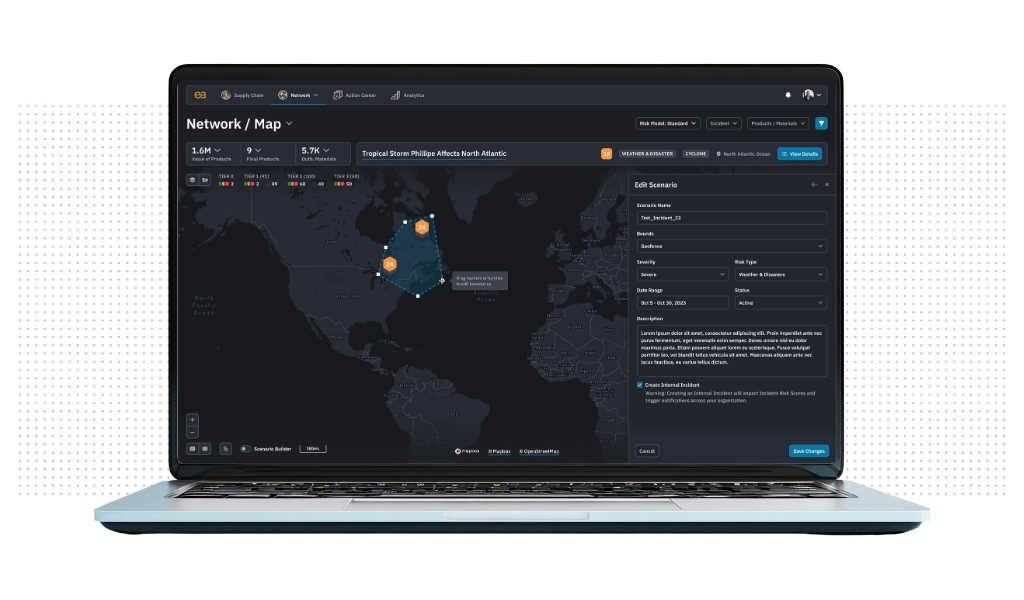
Figure 1: Using the Scenario Builder we can geofence the area of impact, for example, where a storm is likely to make landfall.
As you can see, there is a polygon shape that outlines the likely area of impact. However, this can be done in numerous ways, such as using a radius to simulate the epicenter of an earthquake or selecting an entire country.
Once you have done this you can see which of your facilities are in this geofenced area and how they will be affected. Facilities include your own offices and factories, supplier locations, warehouses, distribution centers, as well as ports or other logistics hubs. If the facility is in your network, and in the geofenced area, you will be able to see how this potential tropical storm will affect it.
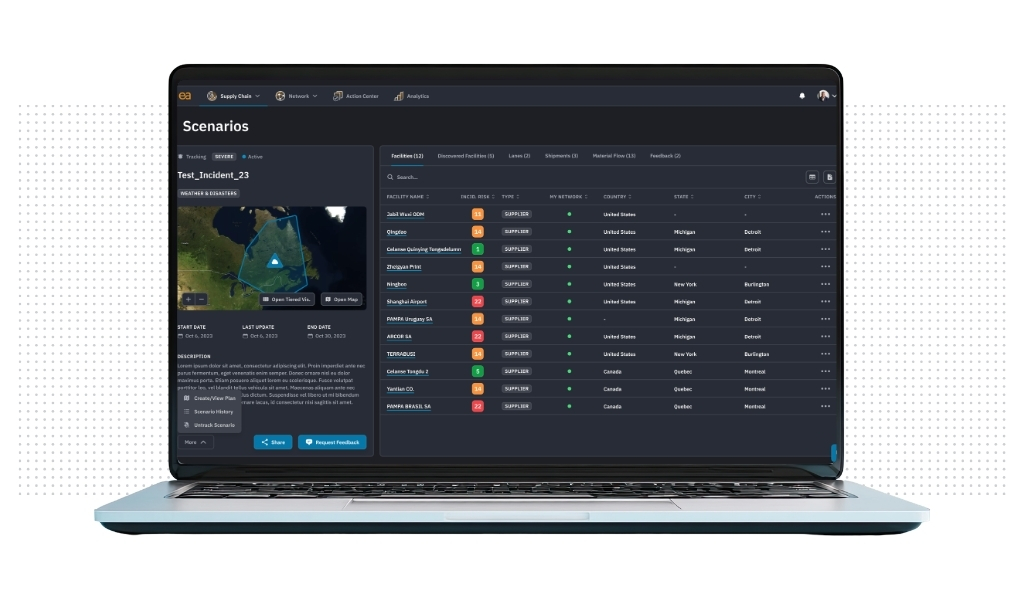
Figure 2: Color coded “incident risk” scores show which facilities in the geofenced area will experience a disruption and its severity.
Although this is a hypothetical situation that you have created, it allows you to understand the impact of such a storm on your facilities. You can quickly see which of your suppliers, ports, warehouses and other facilities would be disrupted.