Blogs

Managing Multidimensional Supply Chain Risk

Manufacturers face a multidimensional challenge in managing supply chain risk. They must prevent production disruptions, ensure business continuity, ensure compliance with regulatory requirements, and meet customer expectations, all while controlling costs and protecting profitability. Most also have internal initiatives around sustainability and ESG.  

For manufacturers, almost all parts of the business connect to the supply chain. Therefore, you cannot ensure operational and business continuity, improve Scope 3 emissions targets, know if your products are free of child labor, and so forth without considering your supply chain.   

Supply chain risk management solutions give you the ability to manage risks holistically. Here we will look at how different SCRM use cases can be used across different departments and functions using the same information and processes. 

The Building Blocks of a SCRM Solution 

Mapping 

The first step in a supply chain risk management undertaking is to map your network. This could include your suppliers, your manufacturing facilities, warehouses, logistics nodes, shipping lanes, or even your customers’ locations. 

To derive value quickly, most companies start by focusing on an initial goal for one business department, use case, or product line. 

This should be a measurable goal, not just a visionary statement. Most companies want to increase market responsiveness or improve resilience. While these are important goals, by themselves, they are not quantifiable. Measurable goals are how you achieve the vision. 

Let’s say your company’s goal is to reduce production stoppages by at least 20% for your top-selling, flagship product.  

First, you create a digital twin of this product’s supply chain. This would include, at a minimum, Tier-1 suppliers along with manufacturing and distribution facilities. 

Risk Assessment 

Next, you use a risk assessment solution to understand the external risks associated with each of these suppliers and locations. These external risks are multidimensional, and include weather and climate-related risks, tax and legal issues, socio-political factors, operational risks, and so forth. This will help you uncover if there are critical issues that you need to address. 

This could mean working with Tier-1 suppliers to make changes to the supply chain. It could also mean slowing down the amount you spend with one supplier in favor of another supplier.  

Some risks you might decide you can live with, since it is impossible to have zero supply chain risk. In this case, you would use scenario-planning to prepare for the most likely or most disruptive risks. 

Risk Monitoring 

Then you leverage risk monitoring. While risk assessments give you the details of underlying issues, risk monitoring gives you early warnings about day-to-day disruptions.  

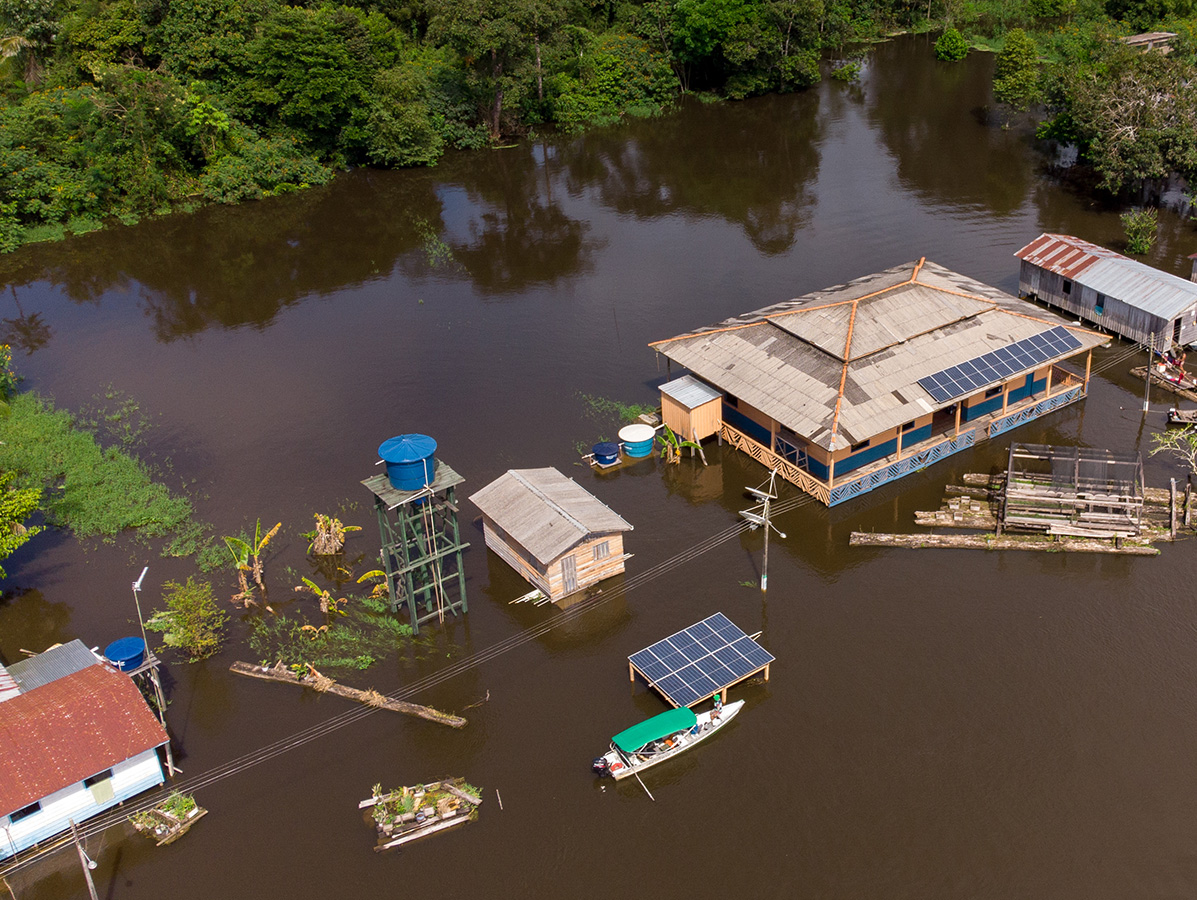
Risk assessment will tell you that Supplier A is in an area prone to flooding; risk monitoring will tell you that a hurricane is heading towards Supplier A’s location. 

Since you have prepared for this exact issue during your scenario planning, you have a pre-approved plan that you can put into action. 

These risk alerts give you a first-mover advantage to act before a potential disruption occurs.  

Other use cases 

You now have a clear insight into potential threats that could impact the supply chain of your flagship product. You can proactively reduce strategic risks and get an early warning of potential disruption. As a result, you will reduce unexpected production downtime by getting ahead of risk. 

However, there are other ways you can use the same information. You could also tailor alerts for facilities managers, production supervisors, HR, and so forth to give them early warning of risks such as extreme weather that could impact your office and manufacturing locations. 

This would mean that you could switch manufacturing to a different location during a disruptive event. This not only protects profits, but also people. 

Real world example 

In January 2021, a polar vortex swept across the Northern Hemisphere, bringing extreme winter weather that caught many off guard. However, the Everstream Analytics Applied Meteorology team detected the disruption early. Using advanced atmospheric models, Everstream issued targeted client alerts. These provided operational guidance on regional risk zones and timelines. 

Armed with these predictive insights, a global beverage client with a major production facility in Houston began scenario planning two weeks ahead of the storm. Recognizing the direct threat to their people and operations, leadership made the unprecedented, C-level-approved decision to preemptively shut down the plant. Employee safety was a critical part of the response. 

Guided by Everstream Analytics projections, the company took further proactive steps to keep operations running: 

  • Relocated labor and resources outside the primary impact zone to keep personnel safe and productive. 
  • Redistributed inventory from Houston to more resilient regional warehouses. 
  • Prioritized shipments to retail stores in less affected areas to maintain product availability.  

When the storm struck Texas, it caused catastrophic blackouts and infrastructure failures. The company’s Houston plant was severely impacted. Yet thanks to our alerts and their early action, the beverage giant kept their people out of danger and minimized operational disruption. They also resumed normal operations significantly faster than their peers. 
The 2026 Annual Supply Chain Risk Report

Get insight into 2026’s most disruptive supply chain risks and strategies to mitigate them.

Get the report

Going Deeper for ESG and Sustainability Risks 

Let’s continue using our example of reducing production stoppages for your flagship product. If your company has ESG and sustainability goals, you will want to understand how the suppliers you work with impact your targets. 

During risk assessment, risks tied to sustainability are also measured. These include: 

  • Personal freedom 
  • Worker rights 
  • Child labor 
  • Environment 

Human Rights Abuses 

Certain industries and countries pose more of a risk of human rights abuses in the supply chain. During the risk assessment phase, you may have uncovered some suppliers that warrant a closer inspection.  

It is well known that supply chains can hide human rights abuses, including forced labor and child workers. Unethical practices are often buried deep in supply chain sub-tiers.  

If you want to be sure that your supply chain is free of unethical labor practices, it is necessary to risk assess your suppliers’ supply chains. 

This is not only the right thing to do; it is increasingly a regulatory requirement. 

In recent years, various laws and regulations have been passed to tackle this pressing issue. These include the Uyghur Forced Labor Prevention Act (UFLPA) and the German Supply Chain Act, and UK Modern Slavery Act to name a few. 

Sub-tier visibility solutions uncover hidden supplier relationships beyond direct tier-one connections. Once you have mapped the sub-tier, you can use a risk assessment solution to identify potential human rights violations.   

Where to begin with sub-tier mapping depends on the types of products you make, and where you source raw materials or components. For example, you might wish to assess if any inbound materials are sourced from Xinjiang to ensure compliance with the UFLPA. 

Violations of these laws, such as the UFLPA, can come with heavy penalties. But even more costly is the negative impact on a brand’s reputation. Take, for instance, the case of the fashion retailer, Boohoo. After reports emerged about illegal working practices in its supply chain in 2020, the company’s share price plummeted 46%. 

Environmental Issues 

Your suppliers have a significant impact on your environmental goals. They are responsible for a huge amount of carbon emissions in your value chain.  

Certain raw materials and products are water intensive. Examples include cotton, almonds, and textiles. Sourcing these from suppliers in regions with water scarcity would contradict your environmental goals. It would also be detrimental to the people who live in that region. 

Environmental issues also impact long-term business viability. Extreme weather events are becoming more common. It is important to use long-range modeling to understand the climate and water risk in your supplier network.  

Depending on your industry and the geographic spread of your supplier, you may need to make significant changes to your supply chain over time. This could include supplier diversification, increased inventory buffers, and flexible logistics networks.  

Other use cases 

ESG and sustainability risks are important for procurement professionals to consider when working with suppliers. But this information is just as relevant to anyone working on corporate sustainability goals. Other teams that this information could benefit include investor relations, human resources, and marketing. Many people want to work with or support companies that are committed to ESG and sustainability. 

Real world example 

A leading food and beverage company sought to optimize its logistics operations by reducing transportation costs and eliminating product spoilage across its supply chain. 

By leveraging 14-day weather forecasts and predictive alerts from Everstream Analytics, the company shifted to a proactive supply chain model. These early insights provided the lead time needed to adjust equipment and reroute shipments well ahead of potential disruptions. 

The results were significant. The client achieved $2 million in direct annual transportation savings and eliminated lost loads due to spoilage. As they reduced their reliance on reefer transportation modes, they also reduced the associated Scope 3 emissions.  

Connecting the Dots of Multidimensional Supply Chain Risk

Modern supply chain risk management can synthesize diverse data streams, such as continuity threats, cost factors, ESG compliance status, and climate risks, into actionable intelligence. This allows you to take a multidimensional view of risk across an organization. By increasing resilience in one area, you strengthen other areas of the business as well. 

By connecting the dots between procurement, production, business continuity, ESG, and climate outcomes, supply chain leaders can transform hidden vulnerabilities into a distinct competitive advantage. This builds value chains that are not only efficient but fundamentally resilient and responsible. 

If you would like to see how Everstream Analytics could help you manage inbound supply and outbound distribution risks, contact us for a demo. 

The 2026 Annual Supply Chain Risk Report

Get insight into 2026’s most disruptive supply chain risks and strategies to mitigate them.

Get the report

Share this post