Response Options
When a disruption occurs or is looming, it is useful to have more than one way of responding.
If a threat is impending, you may be able to use one or more bypass strategies. These are proactive measures taken to avoid disruption before it occurs. Examples include:
- Swapping or upgrading components in production
- Replanning production to account for delayed inbound goods or raw materials
- Shipping earlier to avoid storms, labor strikes and other risks
- Changing transportation modes
For an unavoidable disruption, you could “bridge the gap” until normal operations can be resumed. Examples include:
- Financially supporting a critical supplier that is facing a short-term cash flow problem
- Relocating production to a different facility
- Using a contract manufacturer
- Expediting shipments of critical components
You could also create some buffer strategies. These are strategic, long-term measures designed to absorb the impact of disruptions. They involve building up reserves and redundancies to create a “buffer” against uncertainty. Examples include:
- Hedging commodities with futures contracts to lock in prices
- Using risk intelligence to secure goods before others
- Leveraging back-up suppliers
- Strategic investment in inventory
Real World Response Option Examples
Toyota set industry benchmarks with their “just-in-time” (JIT) supply chain strategy. This minimizes inventory costs and reduces waste. However, after the 2011 earthquake in Japan, they decide to combine JIT with a strategic stockpile of critical components.
A best practice is to undertake scenario planning for the most common or likely risks your company faces. This allows you to consider your options ahead of time. You can also build playbooks that you execute once a disruptive event occurs.
The multinational food and beverage company Danone uses risk intelligence in scenario planning. This allows them to understand the trade-offs and ROI between different response strategies. Buyers align these strategies with management to execute the best response.
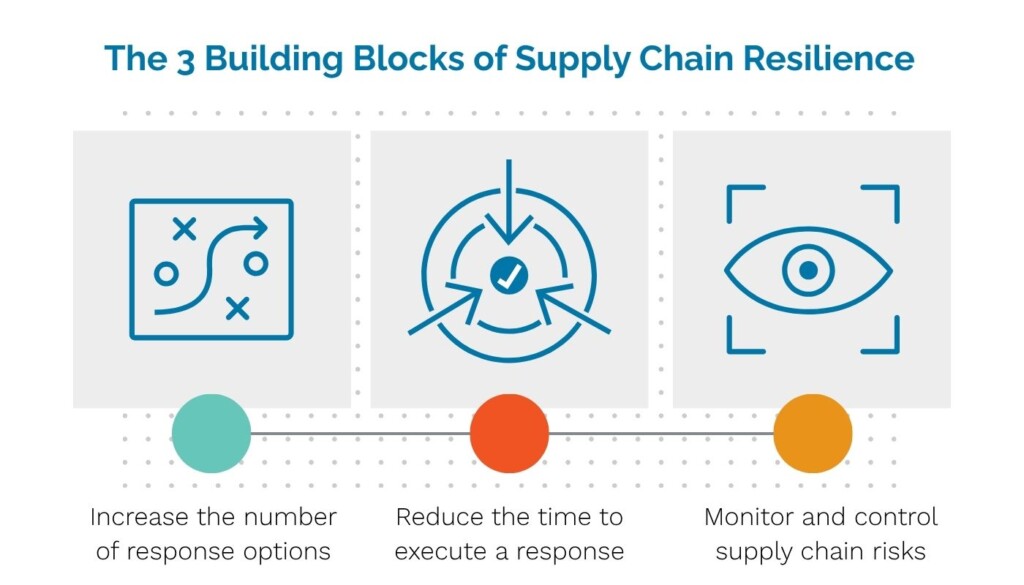
Figure 1: Resilience requires planning for risk, executing response as quickly as possible, and using supply chain risk management software to monitor and manage risk.
Response Time
The quicker you can respond to a disruption, the sooner you can return to equilibrium.
McKinsey & Company found that most companies take about 2 weeks to plan and respond to supply chain problems.
Larger disruption can impact a whole region or industry. Examples include weather events, commodity shortages, protests, and labor strikes. As a result, many companies are competing for the same resources. Early warnings about upcoming disruption give you a first-mover advantage.
Real World Response Time Examples
Global precision systems leader Schaeffler notes the importance of the ability to quickly respond to supply chain challenges. The company has a range of approved strategies that they can leverage. “As soon as you have a signed-off plan B in the drawer, the moment risk hits, you can take it out and just go ahead without any further delay in response.”
One example of this was a planned rail strike. When Schaeffler received a notification about an upcoming strike, they moved quickly to switch from rail to truck transportation. The strike was eventually called off. However, the company stated risk intelligence meant they were able to avoid special freight rates and safeguard customer satisfaction.
Early warnings also give companies longer lead times to respond to looming threats. Beverage leader Molson Coors explains that early warnings mean you can make effective responses to supply chain risks. If you know that a Tier-2 or Tier-3 supplier is experiencing an issue, you have months, not days, to plan your response.
Supply Chain Risk Management
The ASCM defines supply chain risk management (SCRM) as “the systematic identification, assessment, and mitigation of potential supply chain disruptions with the objective of reducing their negative impacts on the supply chain’s performance.”
No supply chain is without risk. Monitoring and mitigating supply chain risks creates resilience. Technology is key here. However, your solution needs to be specific to your supply chain, and the risks that matter to you.
This means you need to monitor your suppliers, facilities, manufacturing sites, distribution hubs, shipments, and so forth. You also need to think about what kind of alerts you will need, and how often you will need them.
For example, you would want immediate notification of a fire or a labor strike at a critical supplier. However, you may decide that you only need daily alerts for geopolitical changes, or weekly alerts for sustainability issues.
Real World Example
After the COVID-19 pandemic, Nissan Americas made the decision to increase supply chain resilience by leveraging SCRM. The automotive giant monitors risk across a variety of risk factors, including strategic sub-tier suppliers.
In April 2025, the company received more than 40 tornado warnings that could impact operations.
Careful co-ordination between Nissan’s supply chain team and the company’s suppliers resulted in zero manufacturing issues. By monitoring risk and communication with suppliers, Nissan was able to keep parts coming and operations on track.
The Benefits Supply Chain Resilience
Whether facing port congestion, a cyber-attack on a supplier, a hurricane, or a tariff change, resilience means having the agility to respond effectively.
Resilience helps to safeguard business continuity, customer relationships, brand reputation, and most importantly, profitability.
You can increase resilience across Plan, Source, Make, and Deliver.
Cross-functional supply chain risk management creates even greater resilience. It aligns procurement, planning, production, and logistics. All have visibility into the risks in their function that could impact another. This allows for a coordinated, quicker response to disruption.
It is a good idea to start with your most pressing pain points. This will help you identify the areas where you can quickly realize value. After this, you can roll out SCRM across all supply chain functions.
You don’t need to go on this journey alone. If you would like to see how Everstream Analytics can help you build supply chain resilience, request your demo today.