

Introduction: Why Supply Chain Risk Management Matters
From weather events to global tensions and rule changes, supply chain risks are everywhere. The Business Continuity Institute found that almost 80% of the groups it surveyed had a supply chain break in the past 12 months. Most had one to ten breaks.
This guide is a simple supply chain risk assessment for teams getting started with supply chain risk management and SCRM.
Global supply chains bring risk. But you can still cut risk and limit damage.
Some groups only try to survive the next crisis. But risk can also be a strength. If you do more than cut losses, you can unlock real financial and business value.
That is the core idea of good supply chain risk management, or SCRM. It moves you from a reactive, siloed plan to a proactive, end-to-end plan that protects the business and supports growth.
The key is to go beyond one team. A logistics team may use SCRM to cut rush freight costs. A procurement team may use it to manage supplier risk. The best results come when these efforts are linked.
But where do you start?
Summary
Good supply chain risk management helps teams move from crisis mode to a planned, linked response.
The best path is to:
- Find and rank the biggest pain points.
- Start with one focus area.
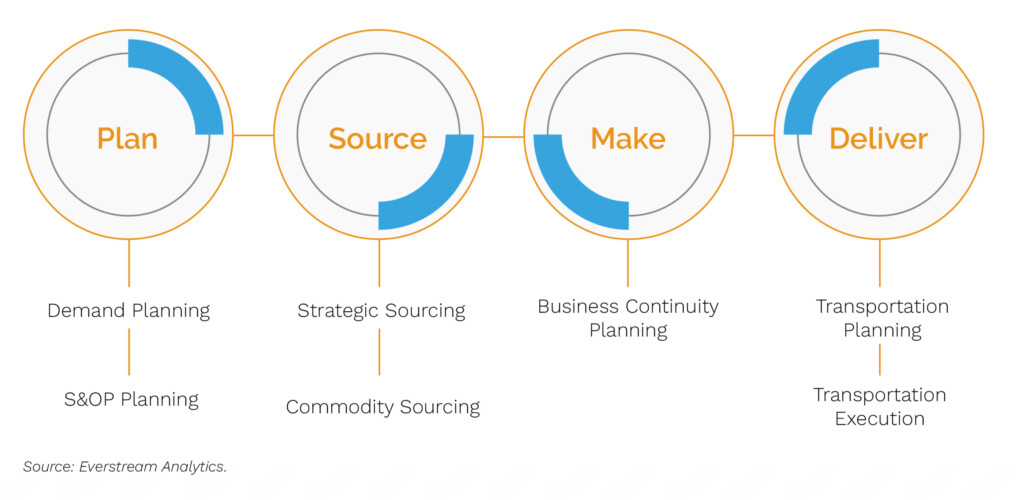
- Grow SCRM across plan, source, make, and deliver.
By breaking silos and using shared data and tech, firms can cut disruption, lift performance, and gain an edge.
Step 1: Find and Rank Your Biggest Pain Points
The journey to SCRM success starts with one key step: know where your biggest risks and opportunities are.
It is easy to get lost in too many risks, so a clear ranking process matters. The goal is to find the issues that can give quick wins and fast value. That helps build the case for a wider SCRM plan.
Build a Cross-Team Group
Do not make this a top-down task.
People in logistics, procurement, planning, and manufacturing know the daily pain points best. Bring them together to get a full view of your company’s risk map.
Ask Your Teams
Ask each team to list and rank its biggest issues.
You need to ask what keeps them up at night:
- An unreliable supplier of raw materials?
- The high cost of expedited freight?
- Poor demand visibility?
Focus on Business Impact
After you list the pain points, rank them by business impact.
Ask which ones cause the most:
- Financial loss
- Operational delays
- Customer problems
This step is not about fixing everything. It is about building agreement on the top risks and a clear start for your SCRM journey.