Third-party risk management (TPRM), compliance, and supply chain risk management (SCRM) all help protect the business. Their primary purposes differ, even when their data and capabilities overlap.
A supplier can pass due diligence and meet compliance requirements while a disruption at its factory, an upstream material source, or a critical port still threatens your production schedule.
Knowing a supplier is acceptable is not the same as knowing your supply chain can keep delivering.
TPRM helps your organization assess and govern third-party relationships. Compliance helps it meet legal, regulatory, and policy obligations. SCRM identifies, and assesses risks, to mitigate the interruption of material and product flow across the supply network.
For protecting supply continuity, revenue, and customer commitments, SCRM drives direct operational impact: it connects risk intelligence to the decisions and actions that keep the business running.
That does not make TPRM or compliance optional. It means supplier governance and obligation management are necessary, but not sufficient, to protect supply performance.
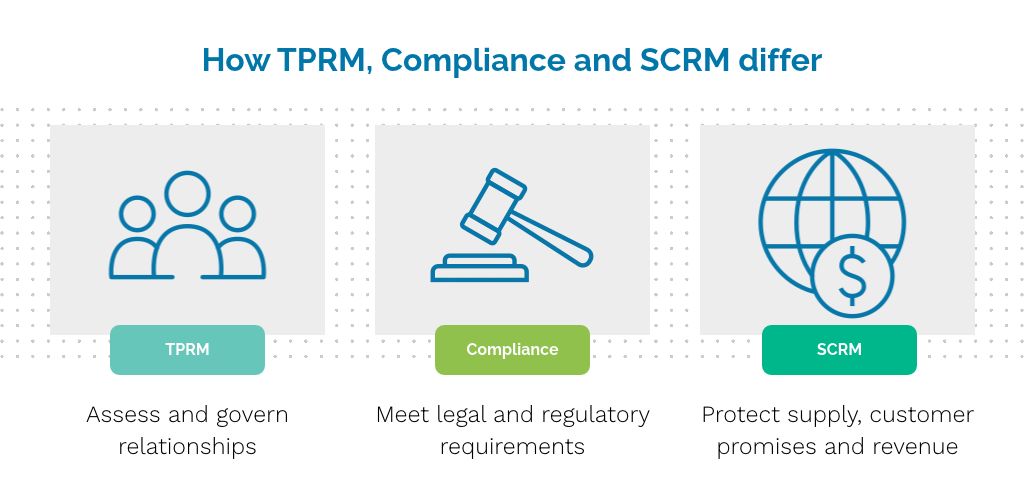
Figure 1: TPRM, compliance, and SCRM are all concerned with risk, but each has different desired business outcomes.
The short version
TPRM asks: Does this third party meet our requirements, and how should we manage the relationship? Its primary focus is due diligence, ongoing oversight, and relationship governance.
Compliance asks: Are we meeting our obligations, and what must we do when a potential violation or exception arises? Its primary focus is appropriate controls, evidence, investigation, and remediation.
SCRM asks: Where could supply be disrupted, what would the business impact be, and how can we prevent or reduce it? Its primary focus is resilient sourcing, production continuity, reliable logistics, and protecting revenue.
The distinction is not simply who receives an alert. It is what the organization can do with that information.
| Risk Management | What it asks | Primary focus |
| TPRM | Does this third party meet our requirements? How should we manage the relationship? | Due diligence, ongoing oversight, and relationship governance. |
| Compliance | Are we meeting our obligations? What must we do when a potential violation or exception arises? | Appropriate controls, evidence, investigation, and remediation. |
| SCRM | Where could supply be disrupted? What would the business impact be? How can we prevent or reduce it? | Resilient sourcing, production continuity, reliable logistics, and protecting revenue. |
TPRM: Understand and govern the relationship
Third-party risk management helps you understand the external organizations your company depends on. In a supply chain setting, this can include supplier onboarding, assessments, remediation, and relationship reviews.
Relevant information may include financial health, cybersecurity preparedness, supplier quality, responsible-sourcing practices, sanctions screening, questionnaires, and internal performance data. This helps you decide whether a supplier is suitable, what oversight it needs, and when corrective action is required.
TPRM is not limited to a one-time onboarding check. A mature program monitors changing conditions and can address business continuity concerns. But a supplier assessment alone does not reveal every dependency that could interrupt production or delivery.
Two approved suppliers, for example, may depend on the same upstream producer. Their individual assessments may look acceptable while the network still contains a single point of failure. Understanding that shared dependency is essential to making diversification effective. Sub-tier mapping is how you uncover precisely this kind of bottleneck.
Compliance: Meet obligations and manage exposure
Compliance helps you meet the applicable legal, regulatory, trade, ethical, and policy requirements. Depending on your business, these may involve sanctions and export screening, customs declarations and other trade requirements. It can also involve adherence to labor and human rights, environmental rules, and responsible sourcing.
The work requires appropriate controls, documentation, investigation procedures, and clear accountability. When an issue arises, your company’s compliance team determines what obligations apply, and what escalation, remediation, or disclosure is required.
These decisions can have significant operational consequences. A trade restriction may make a sourcing route unavailable. A responsible-sourcing concern may require you to change suppliers. A shipment held at customs may put a production schedule at risk.
SCRM supports this work by revealing which supply relationships and operations are exposed. The capabilities overlap, but accountability remains important. SCRM intelligence can inform an investigation or a sourcing decision. However, it does not replace legal interpretation or your compliance team’s authority.