

This week’s supply chain risk news
Importers may have a tough time getting refunds for any overturned tariffs. Here’s why
It’s not clear if or exactly when the U.S. Supreme Court might rule to undo some of President Donald Trump’s tariffs, but if that happens, many companies will want refunds. In the meantime, dozens of firms have asked for an injunction to halt a last step of tariff processing known as “liquidation.” Per Politico:
“Once liquidation occurs, importers typically can no longer challenge the charges through routine customs corrections and must instead pursue formal protests or litigation to recover the money, a costly hurdle for smaller firms.”
The first such deadline just passed, with more coming soon. The Trump administration has been arguing against the injunction request. Officials say they’ll comply if an order comes down to return duties. But, true to a theme familiar to many supply chain observers amid this year’s tariff wrangling, it’s not clear how that refund process might unfold.
Companies not taking the matter up in court, or those who simply lack the budget for it, might rightly wonder how else they’d access such refunds.
The push to ‘electrify everything’ is going to need a lot more copper
What’s something electric cars, grid expansion, energy storage, and data centers have in common? They all depend on metals that are seeing upticks in demand, like copper, cobalt, manganese, and others. A report out this month says in some cases, demand for these metals from the energy transition is now outpacing supply chain capacity.
China still dominates these supply chains, even as other regions are maneuvering to step up competition. Roughly half the world’s aluminum output comes from China, for instance. Then there’s the timely matter of copper, as Mining.com notes:
“Supply constraints are already visible. Disruptions in Chile (Quebrada Blanca, El Teniente), Indonesia (Grasberg) and Peru (Las Bambas, Constancia), paired with slow permitting, have tightened the market.”
Indeed, a structural deficit is looming for copper next year. That is something that could become a persistent problem, barring significant new recycling and mining efforts. Over the next two decades, demand for copper is expected to triple due to the energy transition.
Case study: A storied North Pole customer with significant global reach
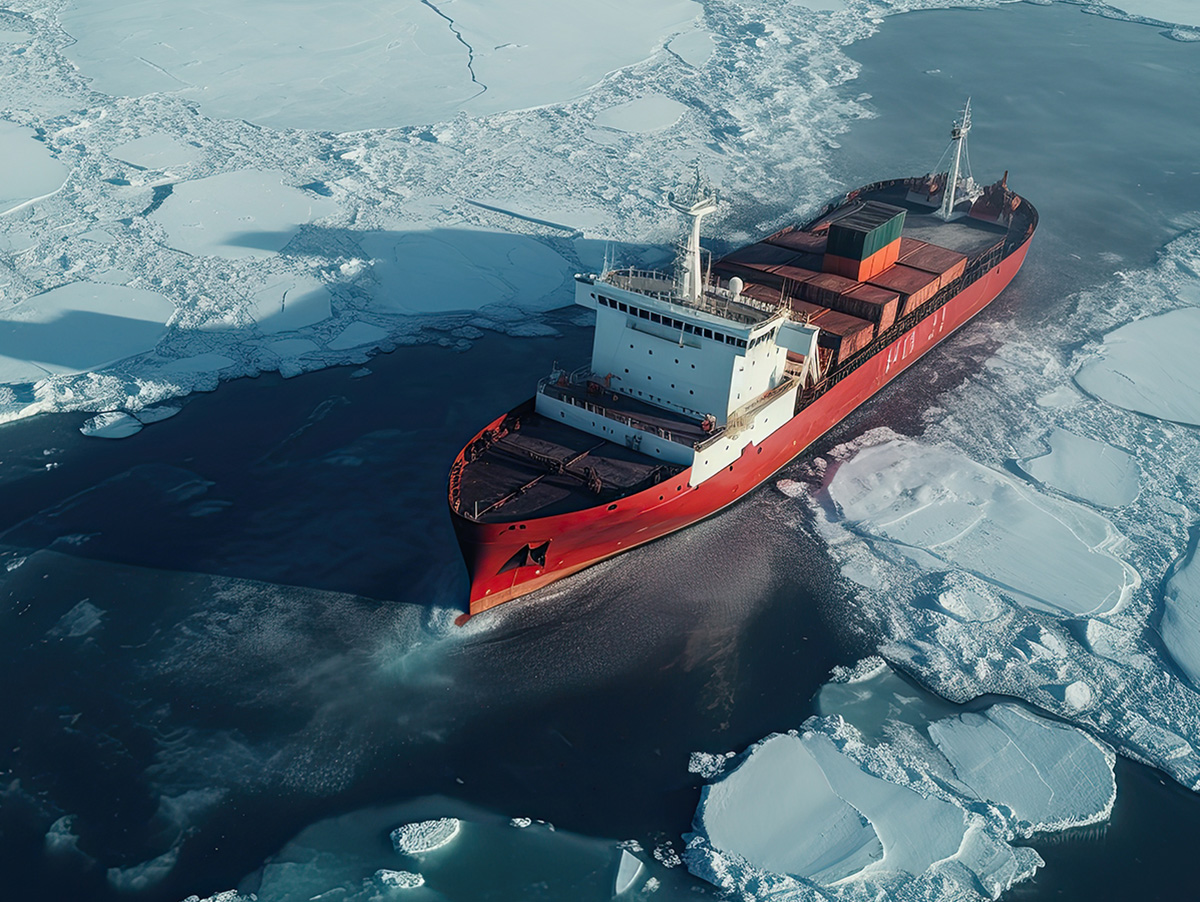
Making enough toys for all the good girls and boys hinges, as any elf can tell you, on getting key supplies to the North Pole on time – that is, well before a key deadline in late December. That endeavor, in turn, comes with a non-trivial risk of supply chain disruption. Here, Everstream has been proud to serve Chief Supply Chain Officer, Mrs. Claus, in getting better visibility over the last few years.
The potential logistics concerns range from nasty Arctic weather to possible elven mischief during port delay. Understanding these concerns allows for better mitigation plans. Again, that late December deadline really won’t budge.
Monitoring for potential disruptions also extends to food imports, as the North Pole’s elven workforce has to eat—and really wants to know if a price surge is expected for cacao beans. Crop predictions, too, are vital for things like alfalfa to feed the reindeer, which are crucial to making timely deliveries at scale.
We have a lot more details about this case study on our blog, which will be back in January.
Other stories we’re reading and monitoring
The U.S. Postal Service will start taking bids early next year for shippers eager to access its last-mile delivery network.
What would winter be without weather impacts to U.S. supply chains? Alas, just in time for the holidays, no less.
A new WTO report explores how value chains are evolving amid a shifting landscape of trade and geopolitics.