

On 28 March 2026, Nestlé announced that 12 tons of KitKat bars had been stolen enroute from Italy to Poland. The company said that it had decided to go public to highlight the increasing trend of cargo theft.
While the so-called “chocolate heist” generated much mirth online, it is a reminder that even the biggest companies with massive global supply chains are not immune from disruption.
Supply chain operations are of course vulnerable to global events, such as the current conflict in the Middle East, the Red Sea crisis, or the pandemic.
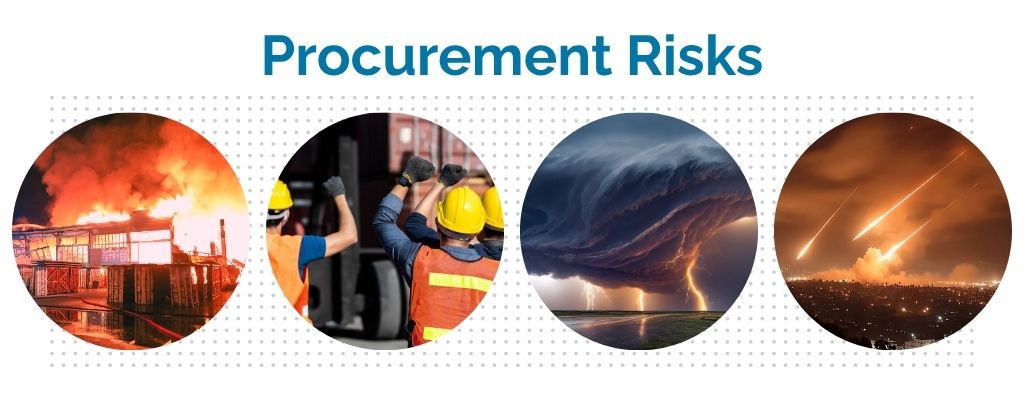
Most events that disrupt the flow of goods are prosaic. These range from factory fires to port congestion; chemical spills; equipment failures; weather disruptions, and so forth.
These are not headline news stories. Instead, they are events that supply chain planners, procurement professionals, and logistics managers deal with every day.
Manufacturers rely on the timely arrival of goods, whether they are raw materials, components, or intra-company transshipments of work-in-progress. Late inbound deliveries upend production schedules, which in turn disrupts the final distribution of goods to customers.
Profitability rests on your ability to make sure that goods are where they need to be, when they need to be there.
It is no wonder that McKinsey & Company found that companies lose 45% of one year’s profits over a ten-year period because of supply chain disruption.
Tackling Inbound Supply Risks
The foundation of any manufacturing operation is its inbound supply chain. One way to safeguard your supply chain is by stockpiling inventory. However, it is not possible to have large buffer stocks of every component.
A failure to secure inbound materials leads to unplanned production downtime, which carries financial consequences. Siemens estimates that production downtime costs the world’s largest 500 companies as much as 11% of their annual revenue every year.
A second more sustainable way of reducing unscheduled downtime is by managing supplier risk.
Supplier Risk Scoring
Understanding supplier risk begins with risk scoring. During a supplier’s onboarding phase, you will have performed due diligence checks for issues such as financial health, product quality, and compliance with various regulations.
These reviews do not consider the physical locations of their manufacturing sites. Where a factory is situated plays a significant role in how likely they are to experience different kinds of disruptive events.
Disruption is often location-based. As a result, comparing suppliers across different dimensions of risk can seem like a complex task.
How do you compare a supplier in an area that has a risk of hurricanes with one located in a country where labor strikes are common? Is it less risky for you to work with a supplier in an area prone to earthquakes, or a supplier in a country that has a poor record of worker protection?
Risk scoring helps you assess supplier vulnerabilities. Building a strategic risk scorecard starts with an assessment of which external risks are relevant to your supply chain.
From there, automated external risk scores are assigned and weighted according to their relative priority. Where relevant, internal risk assessments and third-party data can be layered in and weighted accordingly. This gives you a 360° view of supplier risk.
By gaining visibility into the potential risks a supplier could introduce, you can make proactive sourcing decisions that reduce exposure. You can also manage inventory levels across different suppliers depending on the likelihood of disruption.
Furthermore, you can use scenario planning to create disruption management plans. This will reduce the need for reactive crisis management down the line.
The goal is not to eliminate all possible risks. Rather, you need to know what they are, and if they are risks you are prepared to accept.